Personal project, pipeline & technical-art tooling / 2026
Studio Relay
An artist-facing workbench for reviewed, version-pinned asset deliveries. Validate static props, compare revisions, record review decisions, assemble multi-asset releases and verify saved Unreal assets with traceable source integrity.
The problem
Incomplete exports, inconsistent imports and overwritten deliveries create opaque handoff failures. A successful script exit alone does not prove that the right asset settings survived a save and reload.
The approach
Host-independent Python rules inspect OBJ geometry, naming, UV references, declared coordinates, dependencies and profile budgets. Publishing copies and revalidates staged sources with SHA-256 fingerprints and unique version reservations. Serial Unreal commandlets import assets, generate three LODs, add box collision and save provenance. Fresh-process audits inspect the saved packages.
The result
Recorded September 27, 2026 on Windows, Python 3.12 and Unreal Engine 5.6.1: 24 tests passed, covering validation, versioning, review gates, releases and portable export. Fresh Unreal audits verified eight saved versions from five props and a five-asset pinned release. Extracted delivery packages passed integrity checks, and server restart preserved reviews and releases. Beacon render vertices fell from 5,304 to 1,062 across LODs, approximately 80% fewer vertices, not an FPS improvement. The field case remained at 144 vertices per LOD.
Inside the project
Actionable validation
Stable issue IDs and remedies for naming, UV-reference coverage, dependency containment, coordinate declarations, collision policy and profile budgets.
Versioned delivery
Copy-and-revalidate staging, source fingerprints and unique reservations preserve previous deliveries. Matching completed imports can be audited and reused.
Unreal automation
Commandlet import, three-LOD generation, box collision and provenance metadata. Both process status and structured script results must indicate success.
Revision review
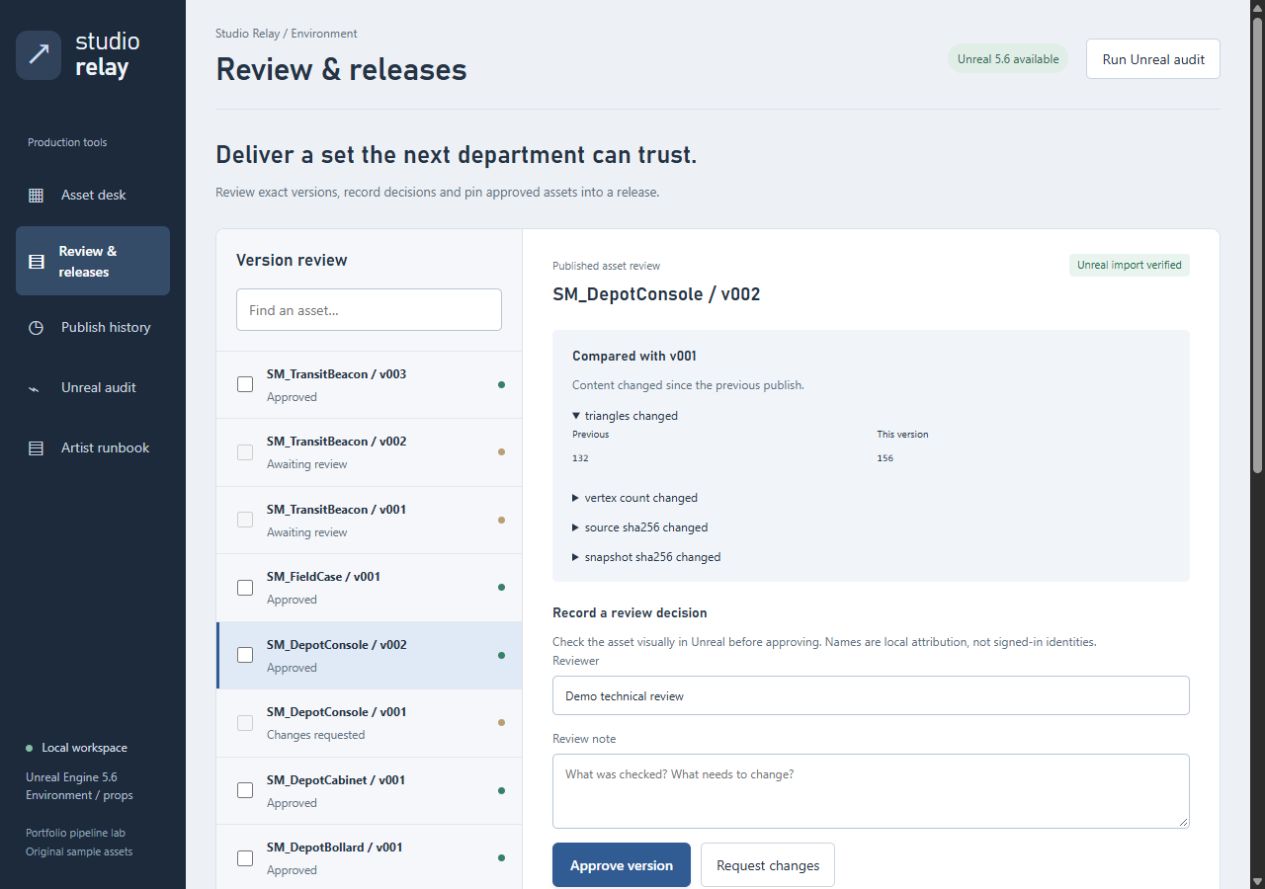
Compare geometry metrics, hashes, dependencies and profiles. Approval or changes requested attaches to an exact manifest fingerprint; reviewer names are local demo attribution, not authenticated studio sign-off.
Pinned releases
Transactional SQLite releases pin one reviewed version per asset. Later publishes do not change a delivery. Portable OBJ packages include dependencies, review notes and Unreal receipts, not cooked content.
GPU source inspection
WebGL2 preview with studio lighting, crease-aware normals, orbit, turntable and wire overlay. JSON CLI verification supports local build runners.
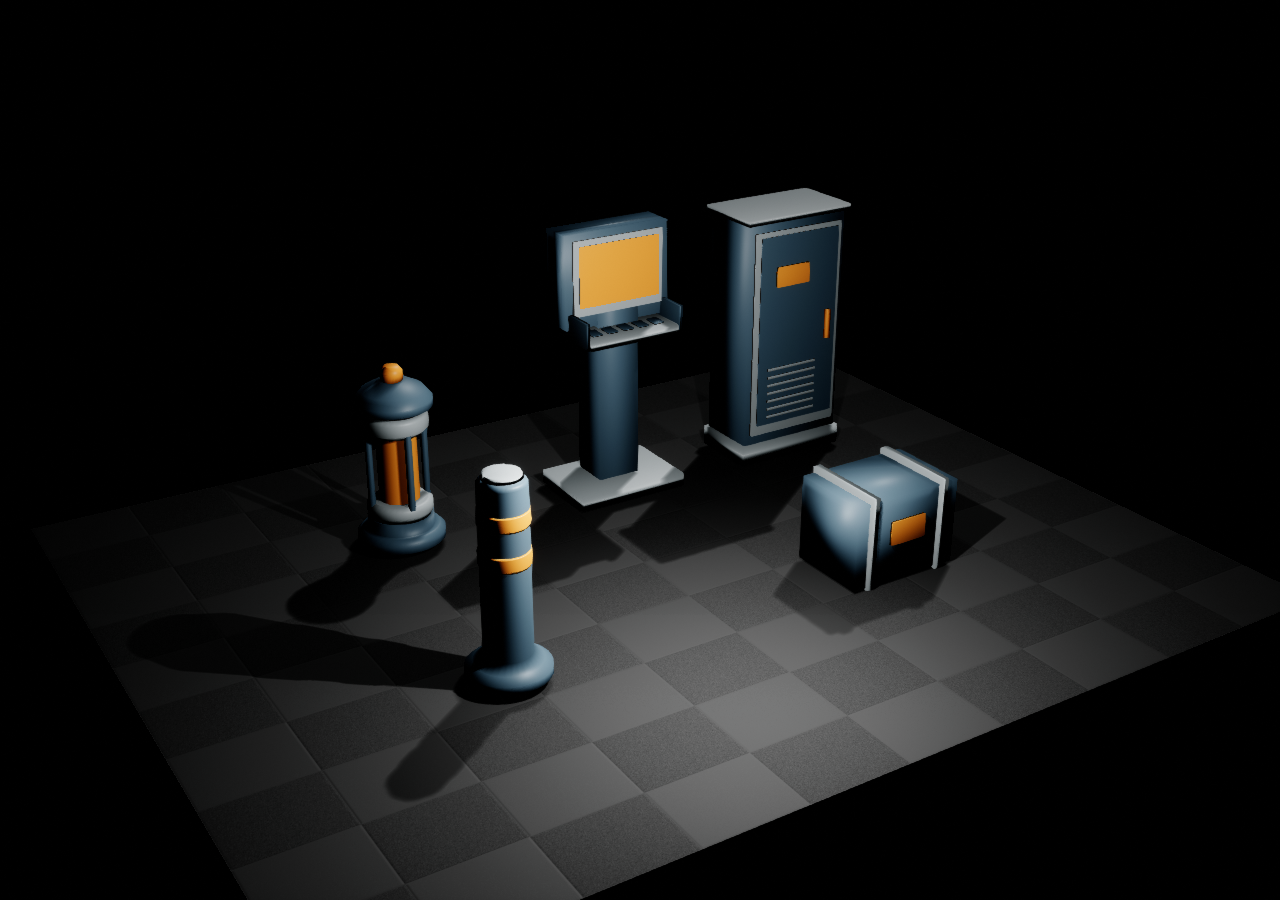
Project captures
Built with
- Python
- Unreal Engine 5.6
- Editor scripting
- Asset pipelines
- SHA-256
- HTML / CSS / JavaScript
Personal portfolio demonstration with AI-assisted implementation and original procedural sample props. Unreal-focused OBJ static meshes only: no Maya, FBX/USD, skeletal publishing, Perforce, ShotGrid or authenticated multi-user approvals. Local review identities are attribution only. UV-reference coverage is not an overlap or texel-density test; all-LOD texture QA is not claimed. Uses coarse box collision; no production-studio deployment or measured FPS improvement is claimed.